
Fancy Walls: From an apartment floor to automated wallpaper production
Opens in new tab
That is the reality Factory operates in every day. The company was founded more than 70 years ago under the name Vignold and has its roots in traditional pre-press. Today, Factory presents itself as a modern media asset producer covering 360° digital and print products. The merger of Vignold with the Swiss company the factory in the summer of 2025 gave rise to the ‘Factory’ brand, which positions itself as a leading network-independent platform for marketing asset production in the DACH region.
Behind that positioning lies a simple requirement: PDF files must be right, every time.
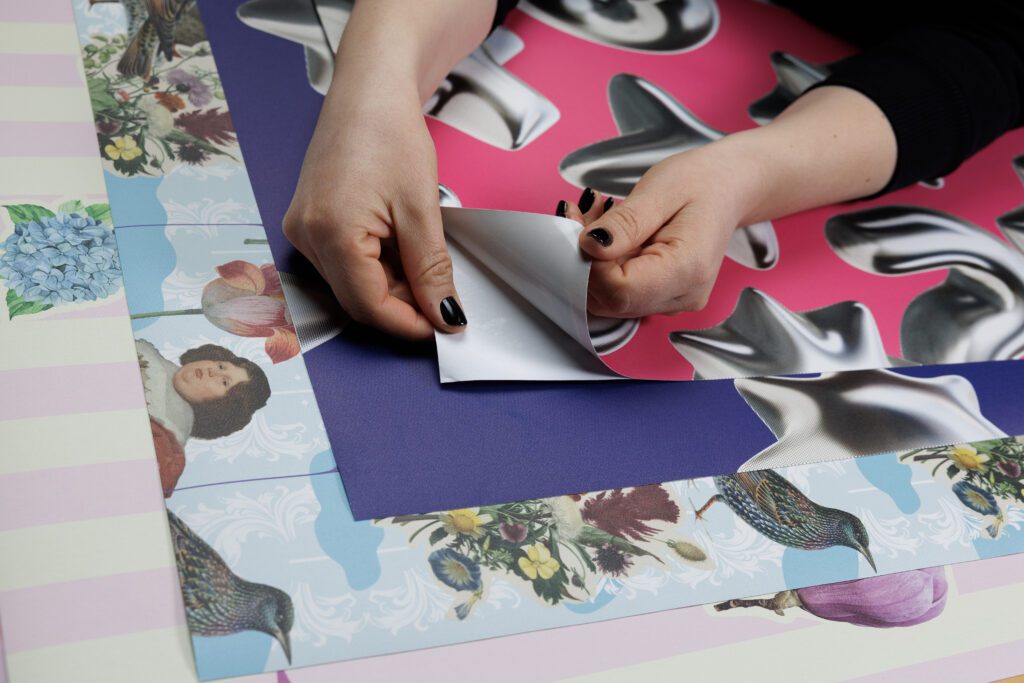
In the print sector, Factory produces both print files and a wide range of products: textiles, paper and foils. Each substrate brings its own technical constraints, and manual prepress checks quickly become a bottleneck at this scale.
For many years, Factory has therefore relied on callas pdfToolbox as the central component for PDF preparation and quality control, working alongside Enfocus Switch for data handling.
Rather than relying on generic checks, the company built material-specific pdfToolbox profiles: one for textiles, one for paper, and one for films. These profiles combine international standards such as ISO PDF/X and the specifications of the Ghent Workgroup with Factory’s own production requirements.
The result is a consistent, automated process that resolves typical prepress issues such as color, overprinting, transparency, spot colors, page orientation, page size, and fonts, before files reach production.
pdfToolbox quickly became more than a preflight tool. PDF files entering production are automatically marked with barcodes outside the print area, ensuring reliable identification throughout the workflow. Once products are cut to the final size and those barcodes disappear, pdfToolbox generates adhesive labels containing all shipping information, streamlining logistics without manual intervention.
In several areas, we were able to partially or even completely eliminate manual steps. Large PDF files were a particular pain point, so we implemented an automated process that scales files as part of the workflow.
Factory also uses pdfToolbox to prepare insert files individually, allowing customers to print those inserts themselves while still meeting production requirements. The pattern is clear: where pdfToolbox started as a quality controller, it quickly became used in many other areas as well due to its flexibility.
The need for automation became even more urgent at Factory’s print facility in Gliwice, Poland, which specializes in textile printing for point-of-sale applications. During seasonal peaks, the site processes up to 2,000 PDF files per month. In fashion campaigns, customers may submit hundreds of files at once, each requiring individual handling. “At that volume, manual processing simply wasn’t sustainable,” Florian Genster explains. The solution was the Impressed Workflow Server from Impressed GmbH, which connects Switch and pdfToolbox into a database-driven, browser-controlled automation environment.
In combination with Switch and pdfToolbox, the system really shows its strength when it comes to ingesting files and preparing them for print.
After installing the Impressed Workflow Server, Factory redesigned the process in its print shop from order intake through prepress to printing. Customers place orders via Factory’s shop system and upload their print files. A job ticket containing all relevant order data is generated and passed to the Impressed Workflow Server, which acts as the communication hub.
From there, pdfToolbox ensures that each PDF is correctly structured, corrected where necessary, and enriched with previews of the final print product. These previews are made available directly through the workflow interface, reducing questions and rework. Additional checks are handled by Radix Preflight, which compares job tickets against incoming PDF data and automatically corrects mismatches.
By redesigning its workflows around pdfToolbox-driven automation, Factory significantly increased its internal processing capacity. Manual intervention was reduced, outsourcing to external print service providers declined, and production costs dropped accordingly.
Our quality management benefits enormously. We were able to dramatically reduce errors in print preparation. That makes a real difference at our scale.