
How Impressu builds practical automation with callas pdfToolbox
Opens in new tab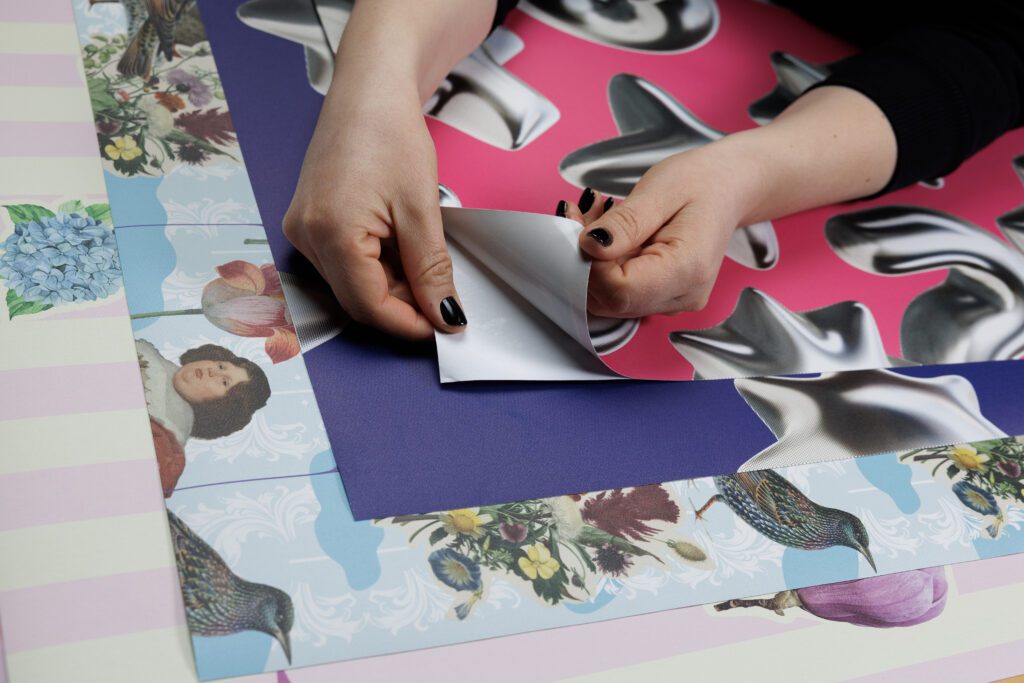
Fancy Walls did not start with a grand plan to reinvent wallpaper production.
There are plenty of Silicon Valley stories about companies starting in a garage. Fancy Walls has a slightly different story – it started in one of the founders’ apartments. The Latvian company began with two people selling wallpaper through an Etsy store and outsourcing the printing. As demand grew, so did the operation. Before long, the team had installed its first printer in the apartment, turning their living space into an improvised production studio. Wallpaper was quite literally cut by hand on the floor.
Necessity shaped a mindset that has stayed with the company ever since. Solve the problem in front of you, simplify wherever possible, and keep moving forward. But most importantly – If nobody else has built what you need, build it yourself.
Neither founder came from the printing industry. Ulams Mazulis, founder and Chief of Production, has a background in pharmacy, while his co-founder and the Chief Marketing Officer, Ivars Ščerbakovs, came from marketing. That may partly explain why they did not feel particularly bound by how things were normally done in the printing industry.
Instead, they approached each problem from these principles: What are we trying to achieve? How can we simplify it? And what can we automate?
Sometimes, that meant building or modifying equipment themselves. At other times, it meant developing their own software. From the start, Fancy Walls invested in an internal CMS and automation across its production workflow.
As the company grew, the single printer became multiple production devices, while automated finishing replaced manual cutting. At the same time, Fancy Walls began standardizing more of its workflow.
That standardization is an important part of the company’s model. Fancy Walls makes wallpaper and wall murals and remains deliberately focused on just that. Materials, widths, lengths, and packaging are streamlined wherever possible, reducing unnecessary production complications. Rather than competing for every possible print job, the company focuses on doing one thing efficiently and to a very high standard.
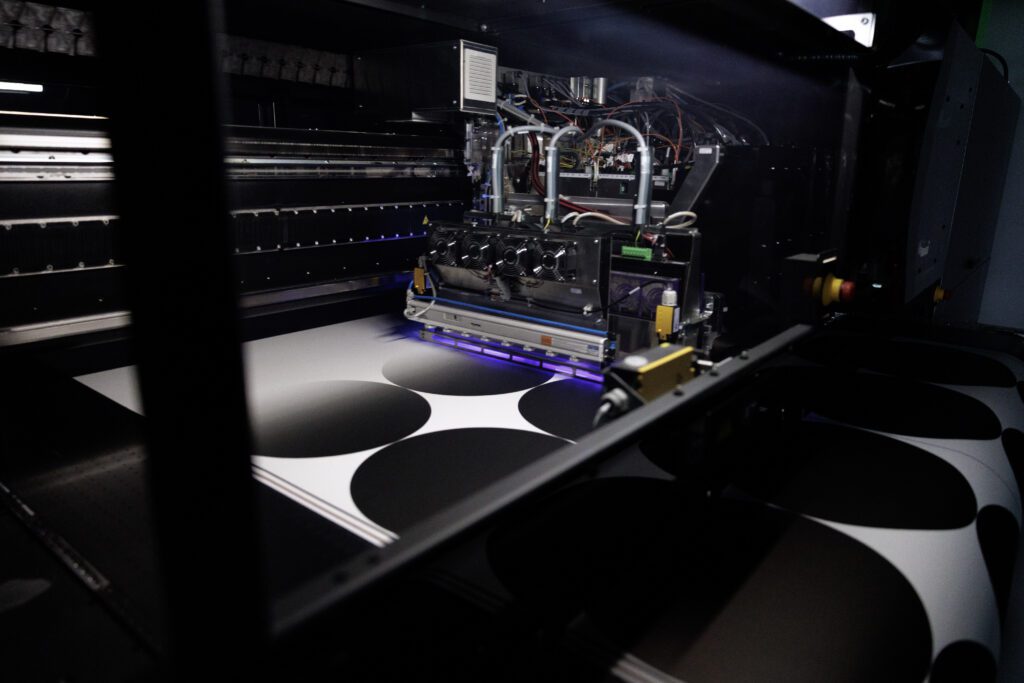
A major step came with the move to Durst printing technology. Ulams recalls that printing a 100-meter roll on their previous equipment could take around 12 hours. With Durst, the same type of job could be completed in roughly 80 minutes. Today, Fancy Walls relies exclusively on Durst printers for its wallpaper production.
As printing became faster, the next constraint shifted upstream. Fancy Walls needed a way to take each order from its software platform and turn it into a production-ready file with as little manual intervention as possible.
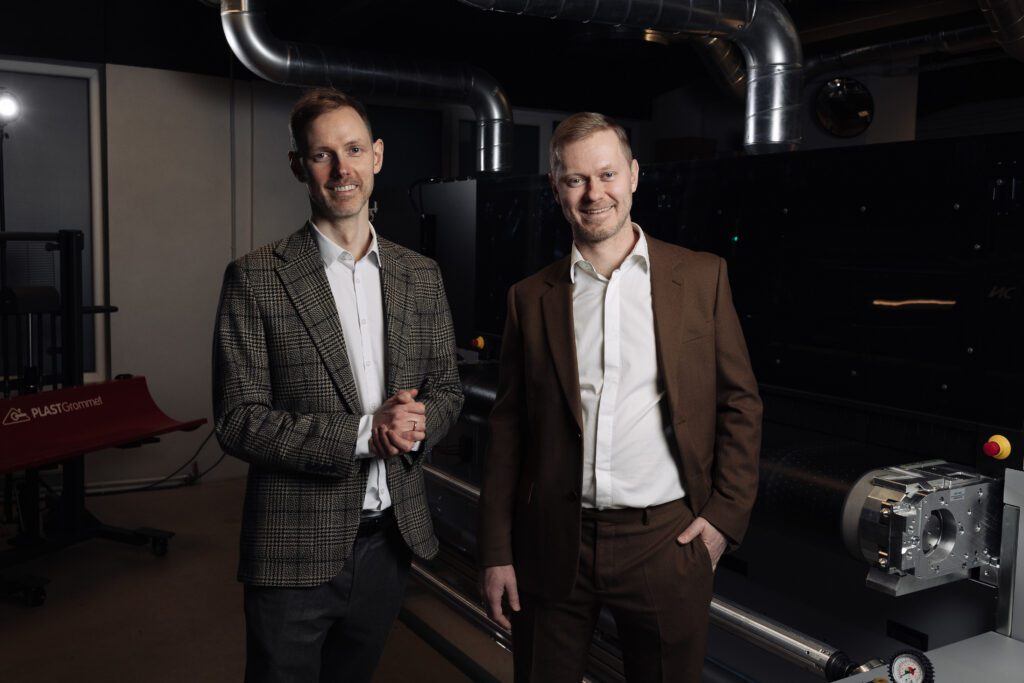
Fancy Walls has since grown into an international print-on-demand wallpaper and white-label production company. Today, around 80 percent of its output is shipped to the United States, making the U.S. by far its largest market.
This international focus shows up throughout the business. Fancy Walls develops its product dimensions around US measurements. The company ships orders directly from Latvia, with deliveries typically reaching customers in the United States within just a few days. An increasing share of production also comes from business clients that sell Fancy Walls wallpaper under their own brands.
For wallpaper dropshipping customers, the goal is increasingly to offer more than printing alone. Fancy Walls has the necessary infrastructure needed to help partners run a wallpaper business without having to invest in or manage their own production operation.
Integrations with platforms such as Shopify, Etsy and WooCommerce, together with Fancy Walls’ own API, allow orders and production information to move directly between systems. The company is also developing tools that support other parts of the wallpaper business. Customers can upload designs, configure repeats and scaling, create room visualizations, define branded packaging, and prepare products for their own online stores.
In other words, Fancy Walls is gradually evolving from a wallpaper manufacturer into the production platform behind other wallpaper brands.
That makes production automation increasingly important. When a customer creates or sells a product through an online storefront, the production system must turn that order into a correctly prepared job. Nobody should have to manually translate between the digital storefront and the print floor.
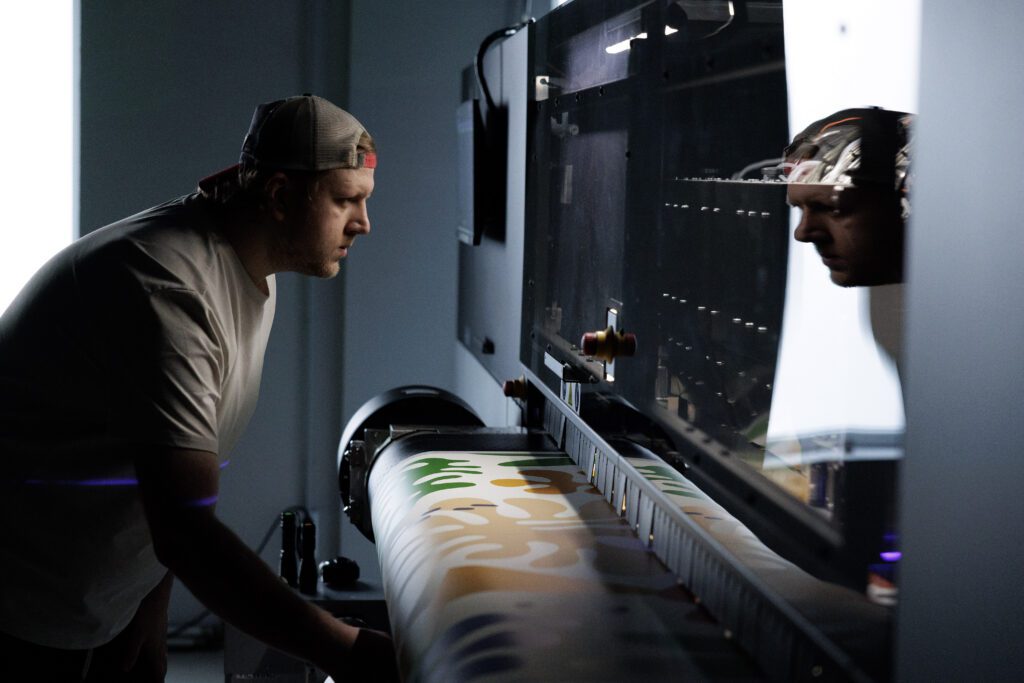
Fancy Walls had already automated much of this process internally. Its existing solution used CSV data and Adobe scripting to prepare jobs. After years of development, the system was stable and reliable.
But one manual step remained – someone still had to download the CSV files and drop them into the right folder to begin processing. After a busy weekend, Monday morning could mean an hour or two of waiting for the backlog to clear.
The next step began almost by accident.
At FESPA in Barcelona, Fancy Walls stopped by the Durst Open Software Initiative area, where callas was also present. An initial conversation about production automation marked the beginning of a bigger transformation. A few weeks later, Fancy Walls picked up that conversation again and started taking a closer look at the next stage of its workflow.
Callas introduced the company to Jan Suhr of Color Consult in Sweden. He is an experienced automation specialist working with both Enfocus Switch and callas pdfToolbox.
Like many automation projects, what appeared relatively straightforward from the outside became considerably more interesting once the details emerged. Fancy Walls already had a highly developed internal process that had evolved over years. Replicating that logic within a new automated workflow required a deeper understanding of the business. It meant understanding PDF processing, the company’s own software, production rules, and numerous exceptions.
One factor made the collaboration particularly effective: Fancy Walls has its own developers.
When the workflow needed a new endpoint, additional metadata, or a change in the company’s internal platform, the development team could implement it directly. Fancy Walls did not have to treat automation as an external system installed alongside the business. Instead, its own platform and the production workflow could evolve together. Within only a few months of the first conversation at FESPA, a substantial new workflow was up and running.
For Ulams, the moment when the value became obvious was remarkably simple. He could trigger a job from the Fancy Walls dashboard and have the platform send the job information into the workflow. Roughly 20 seconds later, the prepared file appeared in the production hot folder. That was the moment the somewhat alien world of Switch started to make sense.
The workflow continues to evolve as the team discovers new cases and exceptions, including unusual filenames. But that is also how Fancy Walls has always worked: implement, observe, improve, and automate the next problem.
For Fancy Walls, tools such as Switch and pdfToolbox represented a significant investment. Ulams, however, is unequivocal about the return: “the gain is enormous.”
Routine production work that previously required manual attention can now happen automatically. Monday-morning backlogs no longer consume as much staff time. Jobs can also move much more directly from the company’s own platform into production.
Beyond the time saved, the new workflow increasingly connects Fancy Walls’ software platform and print production as one system.
With most customers located thousands of kilometers away, Fancy Walls cannot rely on the traditional print-shop model. Instead, its systems must reliably connect e-commerce, customer data, file preparation, production, and logistics at scale.
That focus on standardization and automation has reshaped the business. Fancy Walls began with a single printer in an apartment. Today, it has grown into an international white-label wallpaper manufacturer, built to serve brands and customers around the world.
And Fancy Walls is far from finished.
As Ulams said near the beginning of our conversation: “We still feel there is so much to do and so much to improve.” For Fancy Walls, that sounds less like a complaint and more like a promise.