
Fancy Walls: From an apartment floor to automated wallpaper production
Opens in new tab
Print-on-demand platforms all face the same challenge: customers upload whatever files they have, but production still has to run as if every PDF were predictable.
For Lulu, this is not an occasional exception – it is the foundation of its print-on-demand business.
The company helps authors, organizations, and businesses turn digital content into printed books without the need for inventory, warehousing, or large upfront print runs. Whether a customer orders a single copy of a family memoir, a few dozen copies of a personal project, or connects an online store to an automated publishing workflow, Lulu’s print-on-demand platform must prepare every file correctly before sending it to production.
At the scale Lulu operates today, this level of consistency is only possible through automation.
Lulu users publish around 350,000 books each year, or roughly 1,000 books every day. The company works with a global network of printing partners and supports thousands of production combinations across trim sizes, paper types, and print options. While around 75% of its business is in the United States, the print-on-demand platform serves customers worldwide and produces books as close as possible to the buyer.
Consequently, Lulu’s print-on-demand model depends on one essential principle: every printer in the network must receive files that are predictable, standardized, and ready to print. To achieve this, automated validation and normalization transform highly variable customer PDFs into consistent production files before they ever reach a printer.
We want every book to be produced identically by every one of our printers. The paper, the binding, the quality… those details matter to us.

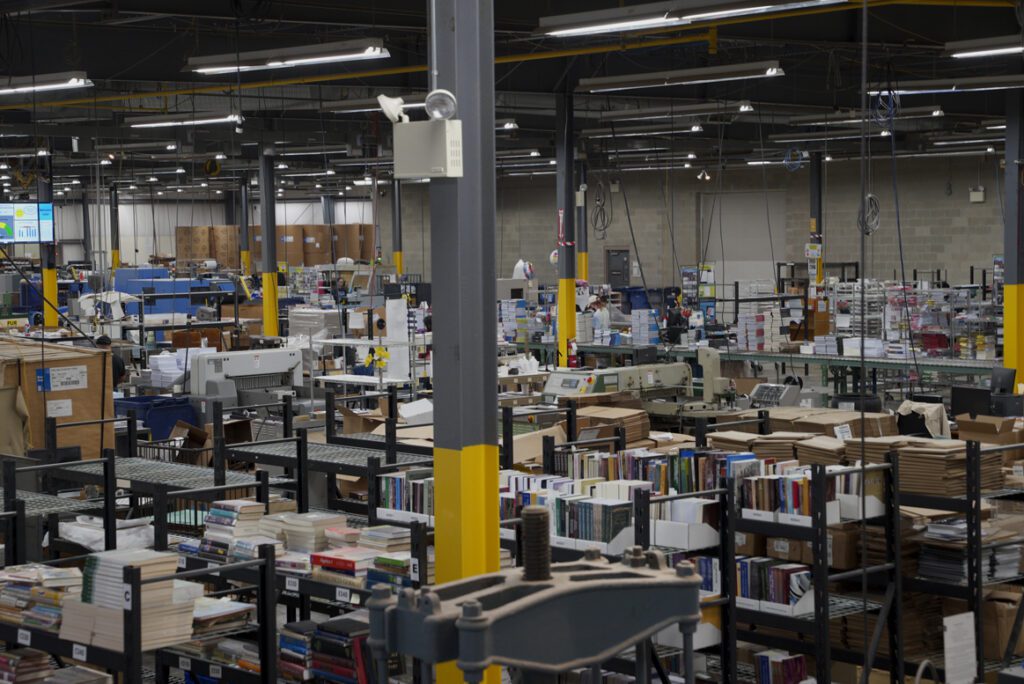
Lulu was founded after Bob Young, co-founder of Red Hat and a longtime supporter of open-source technology, found the experience of publishing his memoir unnecessarily difficult. The frustration became the starting point for a platform designed to remove barriers from publishing.
Today, Lulu remains an independent company with around 100 employees and north of 60 million dollars in annual revenue. It still serves the personal publishing use cases that shaped its early history, but its platform has evolved far beyond that.
Customers use Lulu for family memoirs, self-published books, corporate publishing, e-commerce fulfillment, API-driven publishing, dynamically generated books, and distribution to channels such as Amazon. The company supports integrations with platforms such as Shopify, WooCommerce, and Wix, allowing books to be sold online while Lulu handles printing, fulfillment, and customer service.
For customers, the experience is simple. For Lulu, making that simplicity work behind the scenes is a major infrastructure challenge.
Print-on-demand becomes difficult the moment real-world PDF files enter the process.
Lulu receives PDFs from all kinds of users, created with all kinds of applications, and not always with print production in mind. Some files are carefully prepared. Others contain missing fonts, incorrect page sizes, unsupported transparency, excessive image resolution, or other issues that would disrupt production if sent to the printer unchanged.
Customers upload everything. You have photographers putting images into books at 15,000 dpi because they want the best possible quality, without realizing that this will not improve the printed result.
In a traditional prepress environment, many of these issues would be handled manually. At Lulu’s scale, that is not an option. A platform that produces hundreds of thousands of books per year cannot turn every problematic file into a manual prepress task. It needs clear rules, fast feedback, and automated normalization. This is where callas pdfToolbox became part of Lulu’s production infrastructure.
Lulu uses pdfToolbox as part of a two-stage process. First, a quick validation step verifies basic properties such as page size and page count. Then, a more detailed normalization process checks and corrects production-related issues according to Lulu’s specifications. The goal is not only to detect bad files, but to turn unpredictable input into standardized production files.
Files that fail critical checks are rejected and returned to the customer for correction; the rest automatically move to production. For Lulu’s printer network, the result is significant.
The benefit on the printer side is that every book we send out is according to our spec. The printer doesn’t have any prepress work with these files anymore. They come in, they put them on the press, and that’s it.
That consistency also strengthens Lulu’s relationship with its printing partners. Printers do not receive a random stream of customer-created PDFs that each require individual interpretation. They receive a controlled, standardized feed of work. File normalization has become part of the Lulu business model.
When Lulu rebuilt its technology platform in 2016, it needed PDF processing technology that would fit the architecture of a modern, scalable platform. The requirement that immediately set callas apart was Linux support.
One key reason was that callas had a flexible Linux version. We evaluated open-source tools and other commercial products, but we needed something that would run in our scalable Linux infrastructure.
But the value went beyond platform compatibility. Automated PDF processing depends on experience with real-world PDFs: files created by countless applications, exported with different settings, edited in various tools, and shaped by decades of quirks, edge cases, and production surprises. Lulu needed technology that could help enforce production rules, correct files where possible, and protect the workflow from the unpredictable nature of customer-supplied PDFs.
Today, Lulu runs multiple pdfToolbox processes in parallel to handle the daily production volume. The platform also experiences significant seasonal peaks, such as holiday periods and Cyber Week, when purchase volumes can rise sharply. And some peaks are less predictable; one customer uploaded 45,000 personalized Sudoku books. Another project involved printing Wikipedia. Someone else submitted the human genome as a book.
For Lulu, these examples are unusual but not outside the platform’s logic. The whole point is that the system can support a wide variety of books, customers, and workflows without requiring production to start from scratch each time.
Lulu’s production model combines customer flexibility with strict behind-the-scenes standardization. The company offers 16 trim sizes, multiple paper types, and different print options, resulting in around 3,500 production combinations. At the same time, it standardizes key production parameters, including paper thickness, so that customers can switch between certain print options without rebuilding their files.
This matters because many customers are not print experts. A professional publisher may understand trim size, spine width, paper thickness, and cover templates. A family historian, independent author, or small business owner may not. Lulu’s platform has to guide them through the process while still producing files that work reliably in production.
Kepper does not believe that print is disappearing. He believes its role is changing.
The top end of the distribution curve is getting thinner. Print-on-demand is the future.
In the past, publishing economics were shaped by large print runs. A title had to justify the cost and risk of producing many copies in advance. Print-on-demand changes that equation.
Books can exist for smaller audiences. Backlist titles can remain available. Specialized manuals can be updated and produced when needed. Personal projects can become physical objects without requiring inventory. Online businesses can add printed books to their offerings without becoming print fulfillment companies themselves.
And let’s face it, a nicely printed, well-bound book is a physical object that still elicits strong emotion. It has emotional, cultural, and practical value that is hard to replace.
Our relationship with books may be changing. But I don’t think print will ever die.